

Keywords
valgus intertrochanteric osteotomy
femoral neck non-union
varus trochanteric malunion
Abstract
Summary
Fractures of the proximal femur, i.e., femoral neck fractures and trochanteric fractures, may be associated with a number of late complications. The most frequent of them include non-union, varus malunion, unequal limb length, avascular necrosis of the femoral head, malrotation of the extremity and osteoarthritis of the hip joint.
Individual affections are very often combined, for example, varus malunion, shortening of the limb and its malrotation. This may result in pain, limp and, later, in disorders of other joints, especially the knee, and the lumbar spine. In the past, many of these complications were treated with intertrochanteric osteotomy. Currently, however, the indications for osteotomies have significantly decreased due to advances in internal fixation of proximal femur fractures and the introduction of THA. Nevertheless, intertrochanteric osteotomy remains the method of choice in management of certain complications of proximal femur fractures. Not every orthopedist or traumatologist has the capacity to perform these surgeries, but everyone should know about them and their indications.
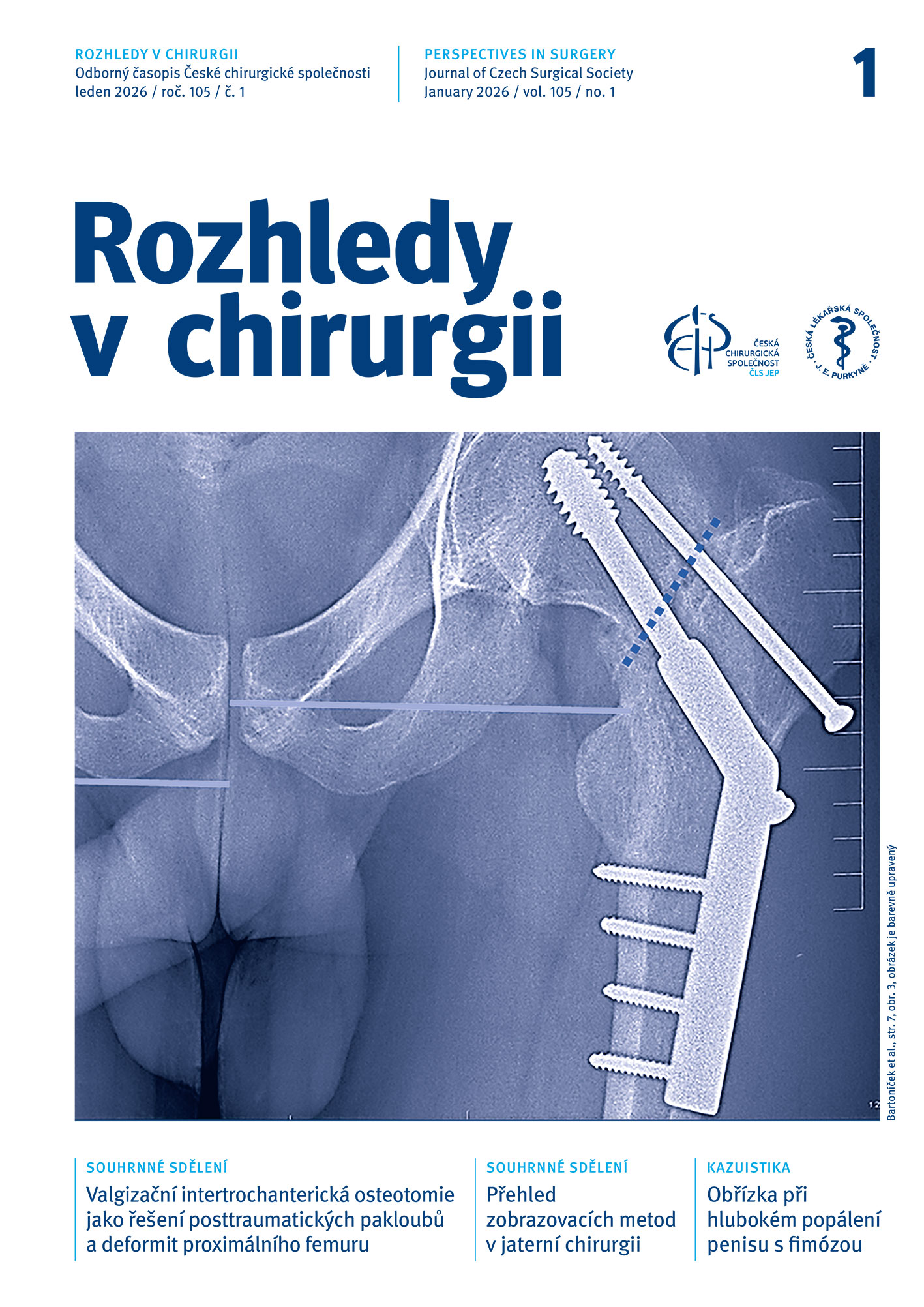
The aim of this article is therefore to give a brief overview of the current possibilities of valgus intertrochanteric osteotomy in the management of posttraumatic non-unions of the femoral neck.
doi: 10.48095/ccrvch20265